
Picture the scene.
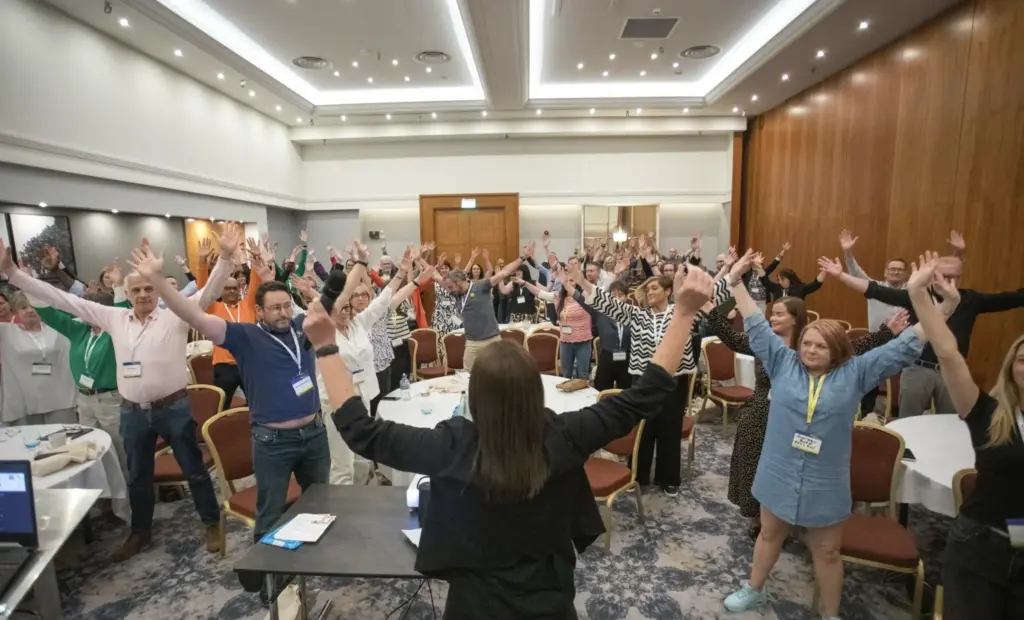
250 business leaders in a conference room at 9am.
Some have been up since 5am. Others have battled the M25, delayed trains or cancelled flights. Most have already checked their emails about 47 times.
They’re physically at the conference. Mentally? Half of them are still at work.
And then I walk on stage.
The high-energy dance music kicks in, and suddenly people are looking up from their phones, wondering what’s going on.
This probably isn’t what they were expecting at nine in the morning.
Then I ask them to breathe.
Yes, breathe.
You can imagine some of the faces.
I’ve spent over 20 years working in recruitment, so I know exactly what it’s like to arrive at an event with your head still full of everything you’ve left behind.
You’re there to learn, meet people and come away with new ideas. But you’ve barely stopped long enough to notice how you’re feeling.
And that’s the problem.
Just because you’ve arrived doesn’t mean you’re ready to take anything in.
Why I start with breathing
As a coach and Oxygen Advantage Breathing Instructor, I spend a lot of time talking about energy, focus and performance.
And one of the simplest tools we have to influence how we feel is something we’re already doing every day.
Breathing.
Most people don’t give it a second thought. Why would they? They’ve managed to stay alive doing it so far.
But how we breathe can influence how alert, calm or stressed we feel.
And when you’ve got a room full of people who have taken a day out of their businesses to learn something, surely it makes sense to help them get into the right headspace first?
I’m not suggesting five minutes of breathing will magically put 250 people into flow.
But it can give them a chance to stop, reset and actually arrive.
And the music? That’s deliberate too.
I love using big, high-energy dance tracks. They create a buzz, get people curious and make the whole experience feel very different from what they might imagine breathwork to be.
It’s not about sitting in silence listening to whale music.
It’s about getting people engaged and ready to give something new a go.
What happens in the room?
First, I explain what we’re doing and why.
Because if you ask a room full of business leaders to close their eyes and breathe without explaining the point, you’re going to lose a few of them before you’ve even started.
Then we work through three simple stages.
1. Settle
We start by slowing things down.
Gentle breathing through the nose, a relaxed exhale, and a chance to notice just how much tension we’re carrying.
Shoulders up by our ears? Jaw clenched? Mind already thinking about the next meeting?
Sound familiar?
This is about giving people permission to stop for a moment.
2. Ground
Next, we make the breathing softer, quieter and more comfortable.
Nothing dramatic. Nobody needs to lie on the floor. Nobody needs to change into yoga trousers.
We’re in a conference room, not a retreat in Bali.
I want people to notice what happens when they stop rushing, even for a couple of minutes.
And there’s something quite powerful about a busy room suddenly becoming quiet.
3. Get ready
Finally, we bring the focus back to the day ahead.
Depending on the audience, I might introduce a short, comfortable breathing exercise to help people feel more alert.
Then I ask one question.
What do you actually want to get out of today?
Not what your boss wants you to learn. Not what the conference agenda says.
What would make today worthwhile for you?
Because there’s a big difference between sitting through a conference and really getting something from it.
And then there’s the afternoon slump…
We’ve all been there.
You’ve had lunch. The room is warm. Someone has dimmed the lights for another PowerPoint presentation.
And suddenly the battle to keep your eyes open begins.
That’s another great opportunity for a reset.
This is where I really love turning up the music.
A big dance track, some guided breathing and suddenly the room has a completely different energy.
People who were struggling to stay awake are now sitting up, smiling and getting involved.
It’s amazing what a change of pace can do.
Breathwork isn’t always about relaxing. Sometimes it’s about waking up.
What I’ve learned
If you’re thinking about bringing breathwork into a workplace or conference, my advice is simple.
Don’t make it complicated.
Explain why you’re doing it. Keep it accessible. Give people a choice about participating. And use language that makes sense to the people in front of you.
And don’t be afraid to make it fun.
Breathwork doesn’t have to be quiet, serious or something people feel awkward about trying.
Sometimes a brilliant piece of music is exactly what you need to get a room full of sceptical business leaders curious enough to join in.
Business leaders don’t necessarily want to hear about finding their inner peace.
They want to think clearly, have more energy, manage pressure and get the most out of their day.
And if a few minutes of breathing can help them do that, why wouldn’t we give it a go?
One of my favourite moments is when someone who looked particularly sceptical at the beginning comes up afterwards and asks how they can use the exercise before a difficult meeting or presentation.
Because that’s when I know they’ve seen the point.
Not just something to do at a conference.
Something they can take back into their everyday life.
And that, for me, is where the real value is.