
Where did you complete your training (or where are you still in training)?
I completed my breathwork instructor training with Oxygen Advantage®, qualifying as an Oxygen Advantage® Breathwork Instructor. I now use these techniques in my coaching and corporate workshops, helping people improve their breathing, manage stress, increase focus and boost energy.
What do you enjoy about breathwork and how has it helped you?
What I love about breathwork is how something we do every single day, without thinking, can have such a powerful impact on how we feel.
It’s helped me manage stress, improve my focus and, most importantly, recognise when I need to slow down rather than keep pushing through.
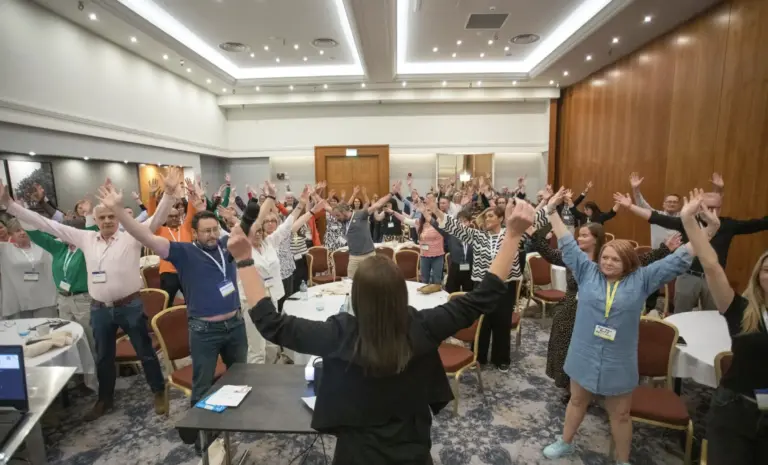
But my favourite part is sharing it with others. I love taking a room full of busy, distracted people, putting on some big dance music and watching the energy completely change in just a few minutes.
People often arrive looking slightly nervous, wondering what on earth they’ve signed up for, and leave smiling, energised and amazed at how different they feel.
For me, that’s the magic of breathwork. It’s simple, accessible and something you can use anywhere, whether you’re about to give a big presentation, having a stressful day or just need a moment to yourself.
And the best bit? You’ve already got everything you need. You just need to learn how to use it!
Are you trained in any other modalities?
I’m also a Certified Health & Performance Coach, ADHD Coach and CBT Practitioner. I combine these approaches with breathwork to help people manage stress, improve focus, build confidence and develop practical habits that support their mental and physical wellbeing. My approach is very much about real-life tools that people can actually use, rather than just theory.
How do they integrate with breathwork?
I see breathwork as the foundation that brings everything else together. You can understand stress, mindset and behaviour, but when you’re feeling overwhelmed, it’s not always easy to put that knowledge into practice.
Breathwork gives people a simple way to pause, regulate their nervous system and create the space to think more clearly.
I then bring in coaching, CBT and ADHD strategies to help people understand their thoughts, manage their energy and build better habits.
It’s about combining what happens in the mind with what’s happening in the body. And making it all practical enough to use in real life, not just during a session.
What is your personal journey?
For most of my life, I thought I was pretty good at looking after myself.
I exercised, ate well, had a successful career and generally considered myself a healthy, happy person. I was always busy, always doing something and loved the feeling of achieving things.
I’d spent over 20 years working in recruitment, starting at Computer Futures, where I became one of the UK’s top-performing consultants, before moving into internal recruitment and eventually running my own successful recruitment business.
I loved the pace, the people, the challenges and the buzz of making things happen. I knew what it was like to work under pressure, juggle a hundred things at once and push yourself to get results.
And I was good at it.
But what I didn’t fully appreciate was the impact that constantly pushing yourself could have on your health.
Everything changed when I started collapsing unexpectedly.
Over the next three years, I experienced a series of frightening health episodes. Despite being someone who exercised regularly, ate well and appeared healthy on paper, something clearly wasn’t right.
Eventually, doctors discovered a cyst on my heart.
It’s difficult to explain what happens when your body suddenly stops behaving the way you expect it to. One minute you’re getting on with life, making plans and thinking about the next thing on your to-do list. The next, you’re having medical investigations and wondering what’s going on inside your own body.
It was frightening, frustrating and completely out of my control.
I’d spent years being the person who sorted things out, solved problems and got things done. Suddenly, I couldn’t simply work harder or be more organised to fix what was happening.
And that was a huge wake-up call.
I started questioning what being healthy actually meant.
Because I’d been doing all the things we traditionally associate with good health. I was active, I ate well and I looked after myself physically.
But what about stress? Recovery? Sleep? Breathing? The pressure we put on ourselves? The constant mental load of trying to do everything?
I began to realise that being healthy on paper and actually feeling well are two very different things. My experience sparked a fascination with how our minds and bodies work together.
I wanted to understand why we can appear to be coping brilliantly on the outside while our bodies are telling us something completely different. So I started studying. I retrained as a Certified Health & Performance Coach, later adding qualifications in CBT, ADHD coaching and Oxygen Advantage® breathwork.
What began as a personal mission to understand my own health eventually became an entirely new career.
In 2018, I launched Michelle Flynn Coaching.
After spending so many years in recruitment, helping businesses find the right people, I was now helping people find ways to feel better, think more clearly and get more out of their lives.
I’ve since spent thousands of hours coaching individuals, business owners, senior leaders and teams, many of whom are incredibly successful professionally but struggling with stress, overwhelm, confidence, energy or simply finding time for themselves.
And one thing has become very clear to me. You can have a brilliant career, a lovely home, a busy social life and all the things you thought would make you happy, but if you’re constantly exhausted, distracted or running on empty, something needs to change.
Breathwork became a particularly important part of my journey because it challenged something I’d always taken for granted.
Breathing.
Something we do roughly 20,000 times a day, usually without giving it a second thought. I was fascinated to discover how the way we breathe can influence our stress response, our ability to focus and how we feel physically and mentally.
And what I loved most was how accessible it was. You don’t need expensive equipment, a gym membership or an hour carved out of your diary.
You can use your breath while sitting at your desk, before a difficult conversation, when you’re struggling to concentrate or when you simply need to stop for a moment.
For someone who’d spent years in high-pressure environments, that really appealed to me.
I completed my training with Oxygen Advantage® and began integrating breathing techniques into my coaching sessions.
The results people described were fascinating. Clients began telling me how they were using breathing techniques before presentations, during stressful meetings, when they couldn’t switch off at night or when they felt overwhelmed.
And I loved that they weren’t dependent on me to keep doing it. They had something they could take away and use themselves. That’s always been incredibly important to me.
I don’t want people to feel brilliant for an hour while they’re with me. I want them to have tools that make a difference when they go back to their actual lives.
Breathwork, but perhaps not as you know it!
One of the things I’ve really enjoyed is challenging people’s expectations of what breathwork looks like. Because when I tell someone I’m a breathwork instructor, I can almost see what they’re imagining.
Yoga mats. Whale music. Sitting cross-legged in silence. And there’s absolutely a place for that.
But it’s not really me, I love big music, energy, laughter and bringing people together.
So I started combining guided breathwork with dance music, creating immersive experiences that help people disconnect from the noise around them and reconnect with themselves.
I’ve now delivered these sessions to hundreds of people at corporate conferences and events. There’s something wonderful about standing in front of a room full of busy professionals, many of whom have arrived with their heads full of emails, deadlines and meetings, and watching the atmosphere completely change.
At first, some people look a little unsure. Then the music starts, they begin to follow the breathing and gradually everyone gets involved.
By the end, the room feels completely different.
People are smiling, laughing and talking about how surprised they are by the experience. Following one of my sessions at a conference, an attendee told me, “That is the best thing I have ever done at an event.”
That meant an enormous amount to me. Not because I need everyone to love dance music, but because it showed that something as simple as breathing, delivered in a different way, could make a real impression.
I now use breathwork both to ground and settle people at the start of an event and to re-energise them after lunch, when everyone’s energy and attention can start to disappear.
I love making wellbeing feel engaging, enjoyable and accessible to people who might never have considered trying breathwork before.
My work today combines everything I’ve learned throughout my life. My recruitment career taught me about pressure, performance, leadership and the realities of working in demanding environments.
My personal health experiences taught me that success means very little if you’re not looking after yourself along the way.
My coaching qualifications gave me a deeper understanding of thoughts, behaviours, habits and the challenges people face.
And breathwork gave me a wonderfully simple, practical tool that connects the mind and body.
I don’t believe there’s one magic solution to feeling better.
For some people, the biggest change might come from improving their breathing. For others, it might be learning to set boundaries, getting more sleep, challenging an unhelpful thought or finally making time for the things that matter to them.
It’s about understanding the whole person rather than looking at one part of their life in isolation.
That philosophy also led me to write my first book, The Balance Trick: One Life. Twenty Ways to Fix It.
It’s filled with practical tools and ideas to help people take a closer look at their lives and make small, realistic changes. I wanted to write the sort of book I’d actually enjoy reading. Something straightforward, useful, with a bit of humour and absolutely no suggestion that anyone needs to become a completely different person to feel better.
If you’d told me years ago that I’d be standing on stage teaching hundreds of people to breathe along to dance music, I’d probably have laughed. But I genuinely love what I do.
I love seeing someone realise they have more control over how they feel than they thought.
I love the moment when a client tells me they’ve handled a situation differently, slept better, felt calmer or finally made a change they’d been putting off for years.
And I love showing people that looking after their wellbeing doesn’t have to be complicated, boring or another thing to add to an already overwhelming to-do list.
My own journey certainly wasn’t the one I’d planned.
I wouldn’t have chosen the health scares or the uncertainty that came with them. But they changed the way I think about life, health and success, and ultimately led me to work that I find incredibly rewarding. These days, I’m still ambitious. I still love being busy, setting goals, working with brilliant people and having fun.
I just have a much better understanding of the importance of balancing all of that with recovery, connection and looking after myself.
And perhaps that’s the biggest lesson I’ve learned.
You don’t have to wait until something goes wrong to start looking after yourself.
Sometimes the smallest changes can make the biggest difference. And sometimes, it all starts with a single breath.
What do you stand for, and what do you stand against?
I stand for
Making health and wellbeing simple, practical and accessible to everyone.
I believe you can be ambitious, successful and love what you do without sacrificing your health or happiness along the way. I’ve lived the high-pressure corporate life, and I know that telling someone to “just relax” when they’ve got 100 things on their to-do list isn’t particularly helpful!
I stand for real conversations, honesty, laughter, human connection and giving people tools they can actually use. I believe small changes can make a huge difference, and that looking after yourself should be part of everyday life, not something you only think about when things go wrong.
What do I stand against?
Wellbeing being made unnecessarily complicated. Endless theories with no practical advice. Quick fixes, unrealistic routines and the idea that you need to completely overhaul your life to feel better.
I also stand against the glorification of being busy, the pressure to be constantly available and workplaces that talk about wellbeing while rewarding people for running themselves into the ground.
And I really dislike the idea that struggling means you’re weak, or that asking for help is somehow a failure.
What is your greatest wish for your clients
My greatest wish is that my clients realise they don’t have to choose between being successful and being happy and healthy. I want them to have the energy to do the things they love, the confidence to make changes, the ability to handle life’s challenges and, most importantly, the time to actually enjoy the life they’re working so hard to build.
I want them to stop feeling guilty about taking time for themselves, stop measuring their worth by how busy they are and understand that looking after themselves isn’t selfish.
It’s essential.
Other Information
A link to my book, The Balance Trick: One Life. Twenty Ways to Fix It.
https://www.michelleflynncoaching.com/book (opens in a new tab)
My free Life Audit, which helps people take a step back and see what’s working in their lives and what might need a little attention.
https://www.michelleflynncoaching.com/lifeaudit (opens in a new tab)
I’d love to share some of my high-energy breathwork sessions, showing that breathwork doesn’t always have to be quiet and serious!
https://www.youtube.com/watch?v=fmYdxA4I0HI (opens in a new tab)